Living Security Expands 2026 Cybersecurity Awareness Month Program with Interactive AI Deception Experiences
New live game-show challenge and CyberEscape Online investigation help employees prepare for deepfakes, voice clones, AI-powered scams, and emerging digital trust challenges
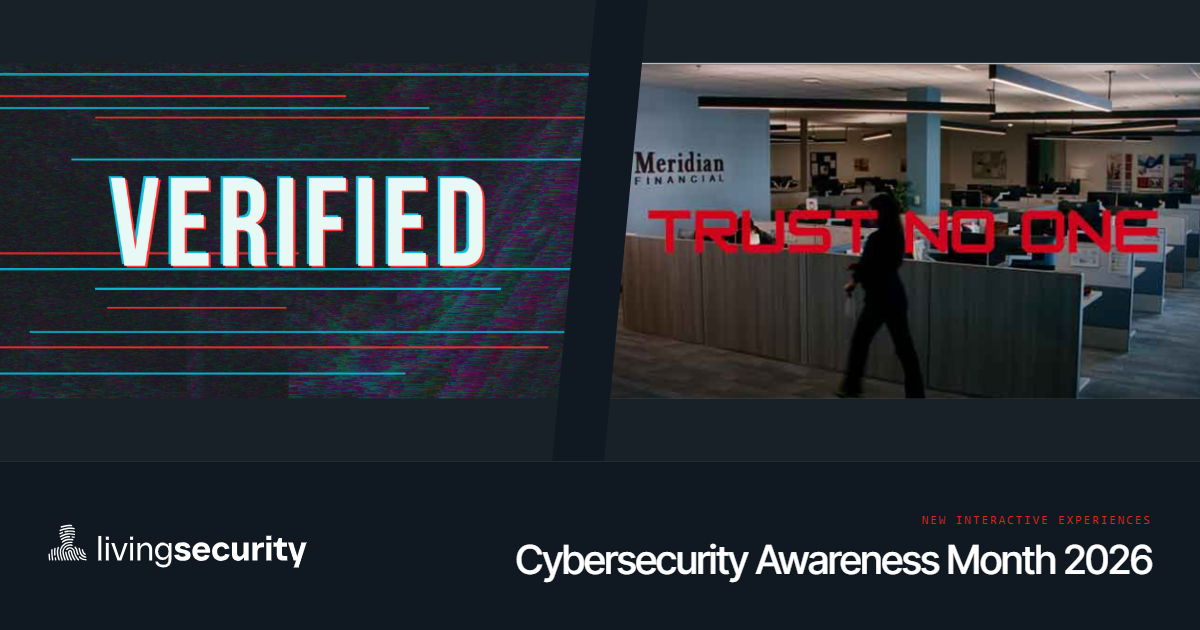
AUSTIN, Texas, September 17, 2026 (Newswire.com) - Living Security, the global leader in Human Risk Management (HRM), today announced two new interactive experiences expanding its comprehensive 2026 Cybersecurity Awareness Month program: Verified, a live AI deception game-show challenge, and Trust No One, a new CyberEscape Online investigation into AI-powered fraud.
The experiences are part of Living Security's gamified Cybersecurity Awareness Month offering, which gives security awareness teams the speakers, interactive experiences, campaign content, employee communications, planning resources, and support needed to run an engaging October program.
As artificial intelligence transforms the threat landscape, employees are increasingly confronted with communications and identities that appear legitimate but may be entirely fabricated. Deepfake videos, voice cloning, AI-generated phishing, and automated social engineering attacks are making deception more convincing and traditional warning signs less reliable.
Built around Living Security's 2026 Cybersecurity Awareness Month theme, Navigating Trust in an AI World, the new experiences help employees practice one of the most important security behaviors of the AI era: knowing when to pause and verify before taking action.
"Technology is changing rapidly, but one principle remains constant: verify before you trust," said Ashley Rose, CEO and Co-Founder of Living Security. "These experiences give employees hands-on opportunities to recognize deception, question assumptions, and practice the behaviors that reduce human risk."
Verified: An Interactive AI Deepfake and Deception Challenge
Verified is a live, hosted 30-minute game-show experience that challenges employees to navigate increasingly convincing AI-powered threats.
Across three interactive rounds, participants evaluate scenarios involving deepfake video, cloned voices, phishing, smishing, impersonation attacks, and AI-powered automation. Audiences participate collectively, identifying suspicious situations and deciding when information or identities should be verified before action is taken.
Rather than teaching employees to rely on visual glitches, poor grammar, robotic voices, or other technical clues that are becoming less dependable as AI improves, Verified focuses on contextual warning signs such as unexpected urgency, changes to normal processes, unfamiliar communication channels, and unusual requests for money, credentials, or sensitive information.
The experience also introduces emerging risks, including prompt injection and AI agents acting on suspicious information, reinforcing that automation does not replace the need for human judgment and verification.
Trust No One: A CyberEscape Investigation into AI-Powered Fraud
Trust No One is a new CyberEscape Online experience that immerses employees in a team-based investigation centered on identity, deception, and trust.
Participants investigate how a sophisticated fraud attempt nearly resulted in financial loss. As they retrace the attack, teams discover how cybercriminals combined publicly available information, business email compromise techniques, AI-generated voice cloning, and impersonation to create a convincing request from a trusted colleague.
The experience demonstrates how attackers can build realistic scams without first breaching an organization's systems, using information from company announcements, professional profiles, vendor relationships, and other public sources to make fraudulent communications appear credible.
Throughout the investigation, participants practice three critical behaviors:
- Slow down before acting
- Verify information and identities through a trusted channel
- Trust evidence and established processes, not assumptions
The experience reinforces that as attacks become more technologically sophisticated, simple human behaviors, such as independently verifying an unexpected request, remain powerful defenses.
From Cybersecurity Awareness Month to Human Risk Management
Verified and Trust No One place employees in realistic situations where they must evaluate information, make decisions, and practice secure behaviors rather than simply consume awareness content.
They are two components of Living Security's broader 2026 Cybersecurity Awareness Month program, designed to give security awareness teams everything they need to plan, launch, and run an engaging October campaign. The gamified program includes expert keynote speakers, interactive and gamified learning experiences, ready-to-launch awareness content, employee communications, campaign resources, and a structured 30-day engagement calendar.
Living Security's 2026 State of Human Risk Report found that 74.8% of risky behavior traces to the riskiest 10% of the workforce, yet two in three people in this year's riskiest 10% were not on last year's list. The findings show that human risk is concentrated but constantly changing, reinforcing the need to engage employees and manage risk continuously throughout the year.
Together, these resources help organizations turn Cybersecurity Awareness Month engagement into behaviors that support a broader Human Risk Management strategy and measurable risk reduction throughout the year.
Availability
Verified and Trust No One are available as part of Living Security's 2026 Cybersecurity Awareness Month program.
Organizations can explore the complete program, including speakers, interactive experiences, campaign content, communications resources, and planning support, at livingsecurity.com/2026-cybersecurity-awareness-month or request a Human Risk Management strategy session.
About Living Security
Living Security is the global leader in Human Risk Management, helping organizations identify, measure, and reduce human cyber risk across humans and AI agents. Its AI-native Human Risk Management platform combines behavioral, identity, and threat intelligence to predict risk, guide response, and prevent cyber incidents before they occur. By connecting security data to measurable business outcomes, Living Security enables organizations to continuously reduce workforce risk while strengthening organizational resilience.
Media Contact: media@livingsecurity.com
SOURCE: Living Security
Source: Living Security